
Most impact-driven organizations know where they want to go. The hard part is getting everyone there together.
I help founders and teams surface blind spots, align across the organization, and design a clear path forward through fieldwork, facilitated workshops, and co-designed roadmaps and structures.
-
Helping founders and teams of impact-driven organizations see what they've overlooked and build the confidence to act on it.
-
A world defined by reciprocity, where the organizations shaping our future are in service to people and the planet.
-
I partner with impact-driven founders and teams to surface what's hidden, make sense of complexity, and co-design the strategies, structures, and processes that move organizations from stuck to clear and from clear to capable.
-
CURIOSITY —
looking at everything with a critical eye
Conclusions come after the work of looking, not before. That means going into the field, talking to the people rarely asked, and looking sideways, forward, and into the gaps others walk past. The uncomfortable questions are usually the most useful ones.EMPOWERMENT —
recognizing your own agency to make impact
People do their best work when they feel seen, challenged, and supported in equal measure. Every engagement is designed to leave teams more capable and more energized than when we started, not dependent on an outside voice, but confident in their own.
IMPACT —
actions that connect to something larger
The work that matters connects people to their communities, the planet, and to a future worth building. That's both a guiding principle and a filter: I work with organizations whose goals I can get behind.
EXPLORATION —
going in with an open mind
Complexity doesn't resolve itself from a distance. An adventurer's mindset means trained to navigate ambiguity, resourceful under constraint, and willing to go somewhere unfamiliar to find the answer.
FUN —
the freedom to think well
Rigor and fun are not opposites. The best thinking happens when people feel safe enough to experiment and that environment has to be deliberately designed for.
Below is a selection of my past work.
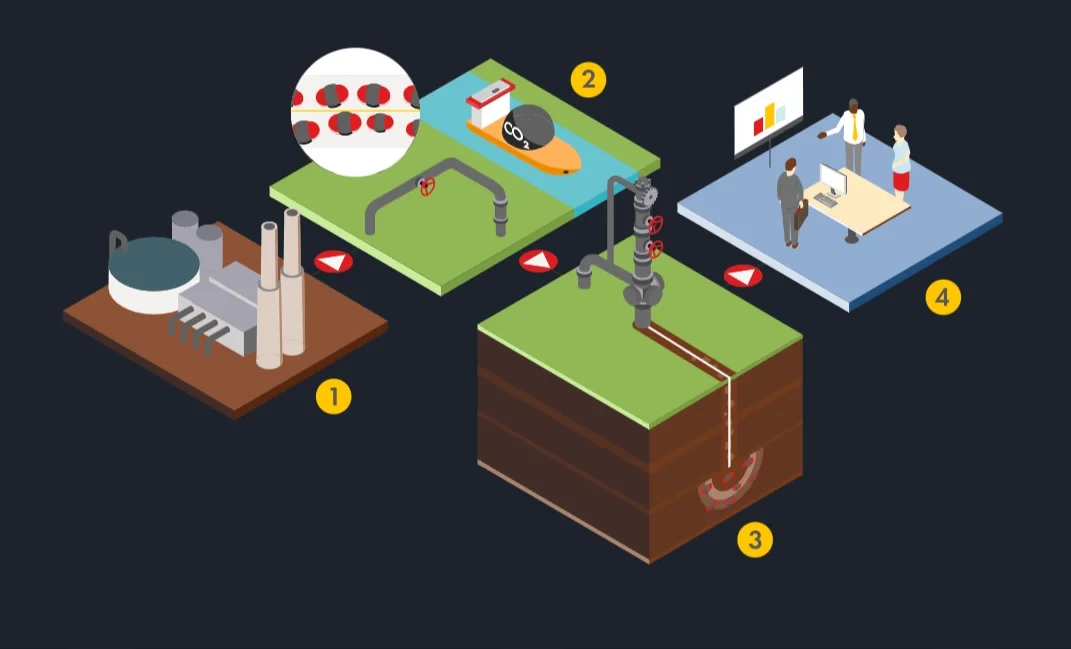
Developing a digital strategy for carbon capture & storage
A CCS facility can take a decade to build. The regulatory landscape shifts constantly. And the internal digital infrastructure — how teams share data, make decisions, work across geographies — hadn't kept up. I joined a small team inside Shell's innovation group to develop a digital strategy for its CCS line of business: four rounds of workshops with engineering, policy, and data stakeholders, a lot of synthesis across conflicting priorities, and a 50-page strategy document that got absorbed into Shell's Transformation 2025 initiative — which took it from a CCS-specific output to something that shaped enterprise-level planning.
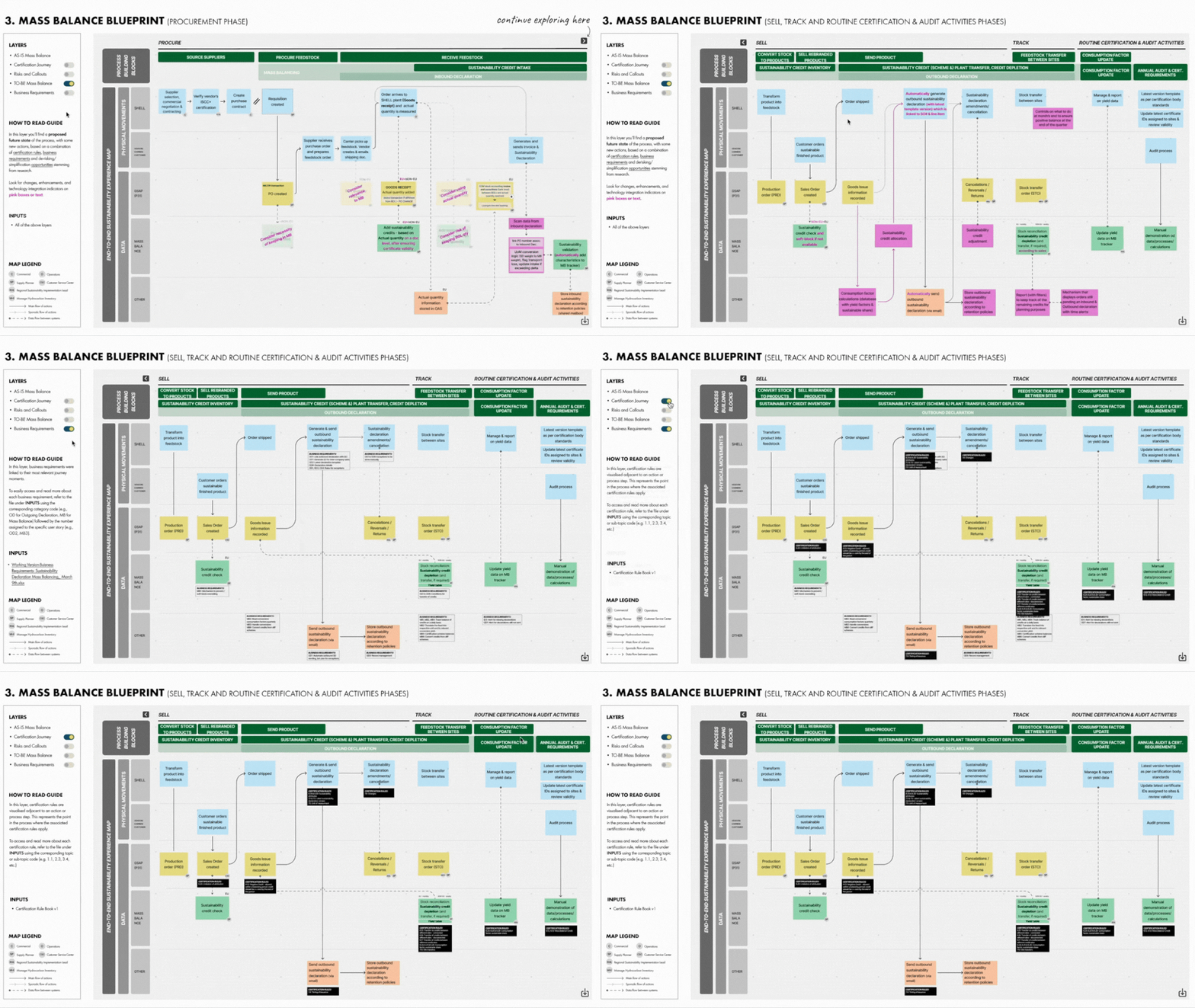
Mass Balance Scoping—
A due-diligence toolkit for a supply chain process where a compliance gap has real financial consequences.
Shell Chemicals was scaling its sustainable feedstock operations — sourcing and selling materials certified under schemes like ISCC, and tracking sustainability credits across the full procurement and production cycle. The mass balance process that underpins all of this is complex: certification rules, regional variation, data moving between systems, and audit requirements that don't leave much room for error. Before the team could scope a new digital solution, they needed to understand what was actually happening. We built a due diligence toolkit that mapped the process end to end — AS-IS and TO-BE states, data flows, certification rules, risk callouts, and a prioritization matrix to guide decisions about what the solution needed to cover first. It gave the team a shared visual understanding of where the risks were and what the minimum viable scope actually looked like.
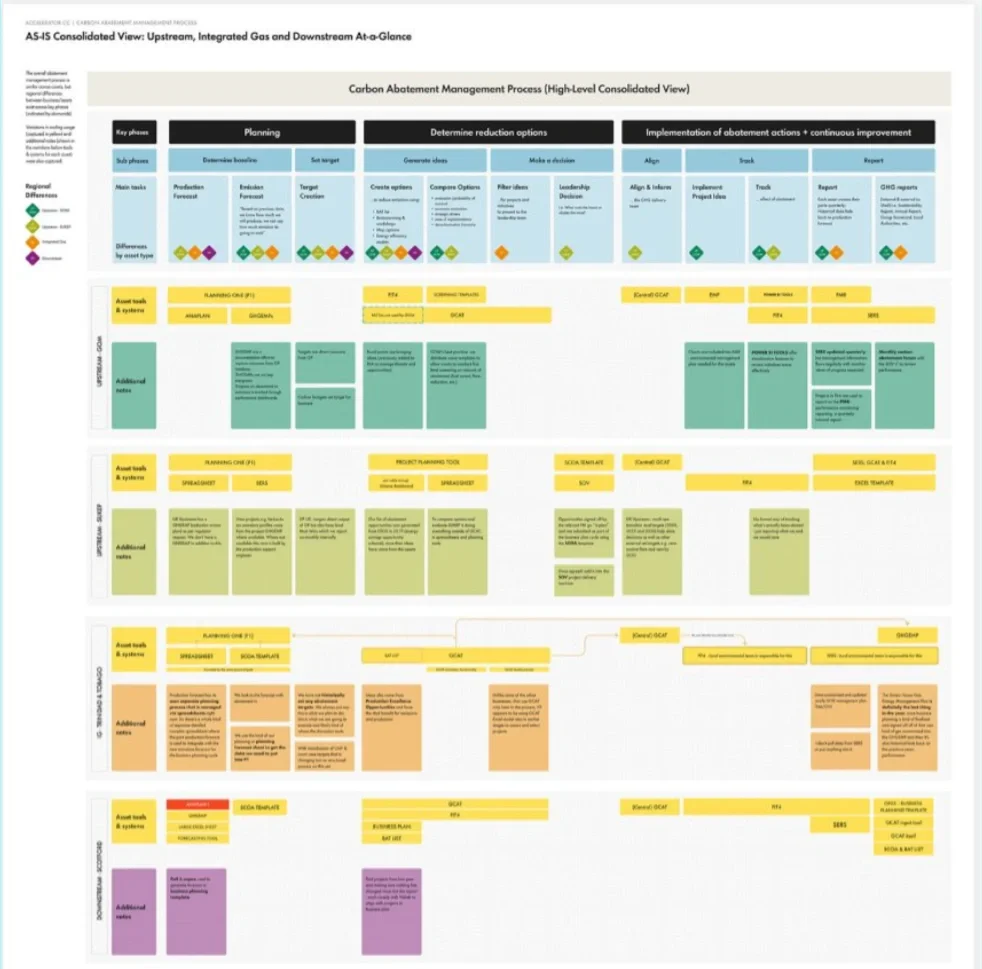
Mapping the Carbon Abatement Management Process
Shell's GHG management tool was used across hundreds of assets worldwide, but nobody had a clear view of the process it was supposed to support. When the team started looking at replacing it, that gap became the actual problem to solve. In two weeks, we ran 8 stakeholder interviews, 3 technical calls, and a two-part remote workshop with 18 people from Europe, the Americas, and Asia. I designed the digital boards, shaped the agenda, facilitated both sessions, and led the synthesis. What came out of it was a consolidated process map that showed, for the first time, not just how the process worked but where and why it differed across regions. Teams that had been working in isolation could suddenly see each other's processes side by side. For leadership, it made visible something that had been difficult to articulate — and gave them a clear place to start.
Fifteen years of service design across sectors, from city government to global industry.